A First Listen to an Unfamiliar Album Without Taking Notes
A first listen to an unfamiliar album can reveal its opening, recurring sounds, and final mood without turning relaxed attention into track-by-track homework.
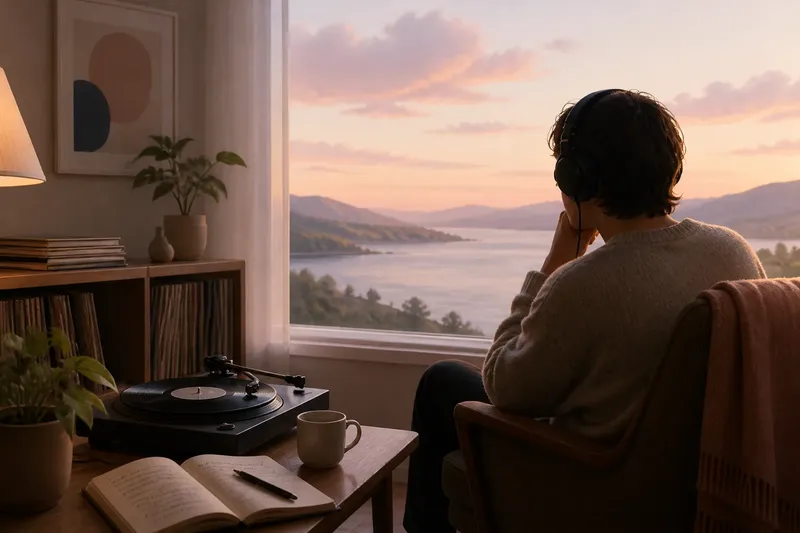
You have a new album queued while the kettle cools, and the first song begins before you have decided what to listen for. A first listen to an unfamiliar album need not become a review session: let the opening establish a world, notice what returns, and give the ending a moment to settle.
The useful choice is not whether to listen “properly,” but what kind of attention suits the moment. A quiet room, a walk, and a shared car ride all invite different kinds of listening. Pick the route that fits your situation, then keep the task small enough that the music stays in front.
Choose your listening setting
If the album is short on your schedule: listen in one sitting if you can, but do not force a single uninterrupted block. A pause between sides or sections can help; a string of unrelated interruptions may make the album’s larger shape harder to sense. If time is tight, choose a calm stretch rather than squeezing the record between tasks that demand your attention.
If you are moving around: walking can suit an album with a steady flow, but busy streets and conversation will pull your focus away. Treat that as a listening texture, not a failure. Notice what reaches you through the surroundings, and save close attention for another time if you want to hear quieter details.
If you are sharing the room: let the album run at a comfortable level and avoid turning the first listen into a quiz for everyone present. A companion’s reaction can be revealing, but a running debate may crowd out the sound itself. You can each hold a different impression without settling it on the spot.
If the album already feels dense: use a familiar, low-distraction setting and listen at a level that lets you hear the whole arrangement without strain. You do not need to isolate every instrument. Follow one broad thread—such as the lead voice, the drums, or the changing density—and allow the rest to remain in the background.
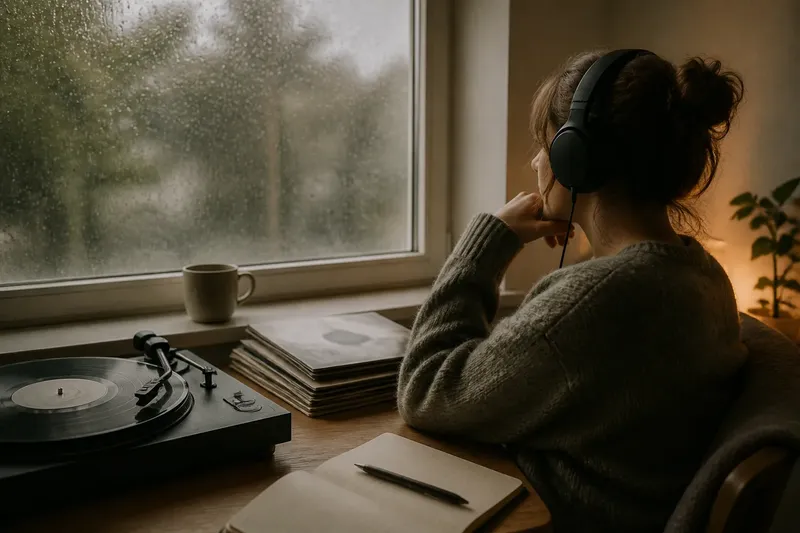
Imagine you press play on a fictional album while sitting by a rain-streaked window, with no other task waiting. The first track begins with a dry guitar and a close vocal; later songs bring back a soft metallic shimmer. You might simply notice that the shimmer returns, then finish with the mood the last track leaves behind. Nothing needs to be written down for that pattern to matter.
Meet the opening
Give the first moments a little room. An album’s opening may begin with a full band, a lone voice, a burst of noise, or silence before the sound arrives. You are not decoding a secret signal. You are finding out what kind of attention the album seems to invite: direct, patient, restless, intimate, or something less easy to name.
Notice the first sound that holds your attention and how it is presented. Does it sit close, as if the singer were beside you, or feel distant and blended into the room? Does the song announce its main idea quickly, or let the parts gather gradually? These are observations, not verdicts. An opening that feels spare may later become crowded; a grand entrance may turn out to be a brief flourish.
Keep the question modest: what did the album make easy to notice at the start? That answer gives you a point of return as later tracks shift the palette. It also keeps you from judging the whole record by the first song’s style or energy.
Track recurring sounds
Across an album, recurrence can be more subtle than a repeated chorus. A particular drum tone, breathy harmony, keyboard texture, room sound, or way of ending a phrase may appear in different settings. Listen for what seems to belong to the album’s sound-world, not just what repeats note for note.
Choose one thread at a time. If you follow the voice, notice whether it becomes more exposed or more layered. If you follow a sound, listen for whether it moves to the foreground, changes character, or slips beneath another part. Then let that thread go. Attention works better as a flashlight than as a floodlight: you can point it somewhere without trying to illuminate every corner at once.
Recurring sounds can make separate tracks feel related, while contrasts keep the album from becoming a single blur. A familiar texture might return in a quieter song, or a bright sound may appear over darker harmony. You do not need to decide whether the return is intentional. The practical question is simpler: did recognition change how the later appearance felt?
Try not to turn every recurrence into a checklist. If a sound catches your ear, remember it lightly; if it does not, let it pass. The aim is to hear the album as an unfolding sequence, not to collect evidence for a theory before you know how the music sits with you.
Let the ending land
Stay with the closing stretch instead of reaching for the next album as soon as the final sound fades. A record may close with a clear stop, a gradual thinning-out, an unresolved phrase, or a song that seems to open a door rather than shut one. Notice the aftertaste: calm, unsettled, buoyant, heavy, or hard to name.
Then glance back—not by replaying every track, but by comparing that final impression with the opening. Did the album’s sound feel more familiar by the end? Did a recurring texture become more noticeable, or did the closing change how you heard the beginning? A small shift is enough to make the sequence feel shaped, even if you cannot explain its design.
Some albums end quietly and leave little to say at once. That is a complete response. Give the silence a moment before deciding whether you want another listen; a first impression can be real without being final.
Which route fits you?
Should I listen to the whole album in one sitting?
Choose one sitting when you have a comfortable stretch and want to sense how the tracks connect. If interruptions are likely, pause between natural breaks rather than trying to absorb the album while juggling another demanding task.
What if I keep getting distracted?
Lower the demands on the session: sit somewhere quieter, put the album on during an easy walk, or focus on one broad sound. If your attention keeps leaving, stop and return later instead of treating distraction as a problem to overcome.
Should I read the lyrics first?
If the words are central to why you chose the album, reading them can be a satisfying way in. For a less guided first impression, listen before looking them up so the voice, phrasing, and sound reach you without a written prompt.
When should I listen again?
Return when one sound, track, or ending keeps coming to mind, or when the first listen felt crowded by your surroundings. A second pass can follow that one point of curiosity rather than asking you to inspect everything at once.
Keep a light memory
You can carry an impression without making a record of each track. Afterward, try one plain sentence to yourself: “The album began close and ended wide,” or “That soft metallic sound kept returning.” If a detail slips away, it probably was not the detail you needed to keep. You can also save the album and let a later replay answer a new question.
A first listen to an unfamiliar album works best when it leaves room for change. The opening gives you a place to begin, recurring sounds offer a few landmarks, and the ending tells you what stayed with you. Next time you press play, choose the setting that fits your attention—and let one good observation be enough.